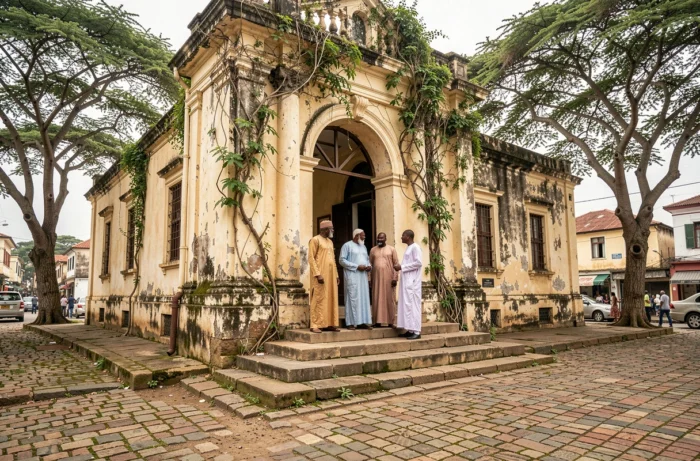
The French colonization in Africa involved about twenty territories, from the Maghreb to Madagascar, over a period that spanned from the early 19th century to the 1960s. Measuring the extent of this colonial empire requires distinguishing between legal statuses (colony, protectorate, overseas territory) and durations of occupation, which vary significantly from country to country.
Duration and Colonial Status: Comparative Table of African Territories Under French Domination
Not all African territories were administered in the same way or for the same duration. Algeria, conquered in 1830, experienced over 130 years of direct colonization, while Morocco and Tunisia were under a later protectorate.
| Country | Status | Start | Independence |
|---|---|---|---|
| Algeria | Colony | 1830 | 1962 |
| Tunisia | Protectorate | 1881 | 1956 |
| Morocco | Protectorate | 1912 | 1956 |
| Senegal | Colony (AOF) | 19th century | 1960 |
| Mali | Colony (AOF) | 19th century | 1960 |
| Côte d’Ivoire | Colony (AOF) | 19th century | 1960 |
| Niger | Colony (AOF) | 19th century | 1960 |
| Burkina Faso | Colony (AOF) | 19th century | 1960 |
| Chad | Colony (AEF) | 19th century | 1960 |
| Congo-Brazzaville | Colony (AEF) | 19th century | 1960 |
| Gabon | Colony (AEF) | 19th century | 1960 |
| Central African Republic | Colony (AEF) | 19th century | 1960 |
| Cameroon | Mandate then trusteeship | 1919 | 1960 |
| Togo | Mandate then trusteeship | 1919 | 1960 |
| Madagascar | Colony | 1897 | 1960 |
| Djibouti | Overseas territory | 19th century | 1977 |
| Comoros | Colony | 19th century | 1975 |
Two administrative entities structured the French presence in sub-Saharan Africa: French West Africa (AOF) and French Equatorial Africa (AEF). Each encompassed several colonies managed from a general government based respectively in Dakar and Brazzaville.
To explore the list of countries colonized by France in detail, it is also necessary to include the territories under the mandate of the League of Nations (Cameroon, Togo), recovered after World War I from the German colonial empire.
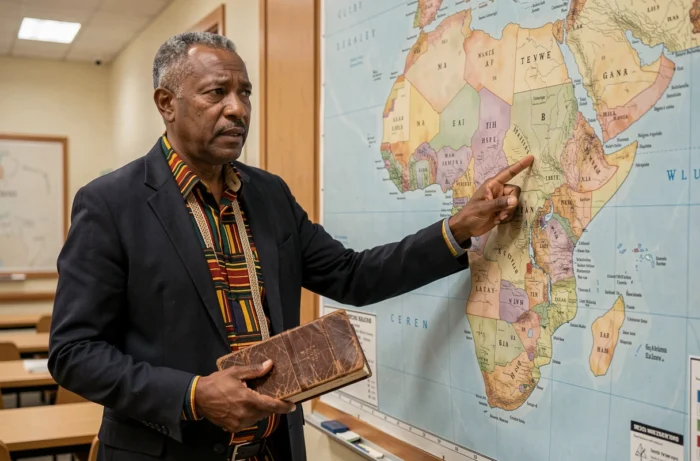
North Africa and Sub-Saharan Africa: Very Different Colonial Logics
The differences in duration and status reflect distinct colonial realities. Algeria was the only French settlement colony in Africa, with a massive presence of European settlers and an independence war that lasted from 1954 to 1962.
Morocco and Tunisia, placed under protectorate, formally retained their monarchical or beylical sovereignty. France controlled diplomacy, the military, and finances, but local state structures were not dissolved. This legal nuance facilitated less violent transitions to independence than in Algeria.
Sub-Saharan Africa Organized into Federations
In West Africa and Central Africa, France created administrative federations. The AOF covered eight territories, while the AEF encompassed four. These groupings explain why the vast majority of sub-Saharan independences are concentrated in the year 1960, often referred to as the “Year of Africa.”
The borders inherited from this colonial administrative division still exist today, fueling ongoing border tensions and territorial claims in several regions of the continent.
Recent Military Breaks with Former French Colonies
The post-colonial period is not limited to cooperation agreements signed in the 1960s. Since 2020, a series of military breaks has redrawn the map of the French presence in Africa.
- Mali achieved the complete withdrawal of French forces in 2022, after years of military operations (Serval then Barkhane) and an explicit rejection of French presence.
- Burkina Faso followed in 2023, and then Niger at the end of 2023, in a context of military coups claiming full sovereignty.
- Chad ended its defense agreement from 1976 in 2024, Senegal closed its French bases in 2025, and Côte d’Ivoire completed the withdrawal of bases the same year.
In just a few years, the permanent French military presence in West Africa has virtually disappeared. These three Sahelian countries (Mali, Burkina Faso, Niger) have also formed an Alliance of Sahel States (AES) to mutualize their stance against the former colonial power.
Shifting Towards New Partners
This French withdrawal is accompanied by a geopolitical shift. Countries that have expelled French troops are turning to Russia and Turkey for their security and economic cooperation. The bilateral France-former colony relationship is no longer the only relevant framework for analyzing the post-colonial African situation.
The issue of the CFA franc also illustrates this reconfiguration. ECOWAS is working on a project for a common currency (the Eco) that would eventually replace the CFA franc, a monetary symbol inherited from the colonial period and regularly criticized as an instrument of economic dependency.
French Colonial Empire in Africa: What the Numbers Do Not Show
The table of dates and statuses provides an administrative view of colonization, but it does not account for certain realities. The case of Madagascar is telling: the conquest by General Gallieni in 1897 is said to have been accompanied by the disappearance of about 100,000 people, according to historical sources.
The distinction between colony, protectorate, and mandate also masks very variable degrees of control. A protectorate like Morocco had an institutional maneuvering space that colonies like Senegal or Chad did not have. Conversely, the four communes of Senegal (Saint-Louis, Gorée, Rufisque, Dakar) granted French citizenship to their inhabitants, a unique case in the French colonial empire in Africa.
The map of former French colonies continues to be reconfigured politically and militarily. The independences of the 1960s marked a formal break, but the events of 2022-2025 show that a second wave of redefinition of relations between France and its former African territories is underway.