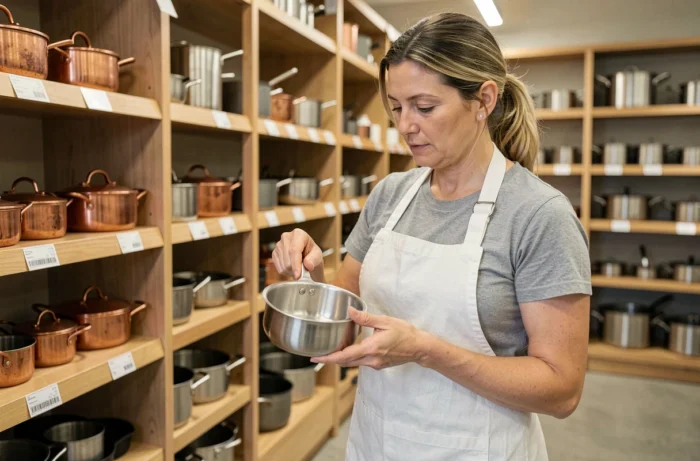
The choice of kitchen equipment is rarely made at the time of purchase. It is determined by usage, when a pan loses its coating after a few months, when a multifunction robot sits in a cupboard due to lack of spare parts, or when the energy bill rises without having anticipated the actual consumption of the appliances. Choosing the right kitchen equipment means balancing durability, versatility, and cost of use over several years.
Repairability index and cost of use: criteria that product sheets do not highlight
A kitchen appliance is not just about its power or purchase price. In France, the repairability index covers several categories of appliances, including dishwashers. This index evaluates access to technical documentation, ease of disassembly, and availability of spare parts.
In practical terms, a well-rated appliance in terms of repairability costs less over its total lifespan. A dishwasher whose drain pump can be replaced in twenty minutes without specific tools will avoid a complete replacement after a few years. Before buying, check if the manufacturer publishes its disassembly diagrams and if the parts are available outside its authorized network.
The actual consumption can also differ significantly from the values declared on the energy label. For an oven or a cooktop, comparing consumption data under usage conditions (and not just the energy class) allows for anticipating the true operating budget. A convection oven that consumes less per cycle but requires longer cycles is not necessarily more economical than a well-sized traditional model.
To refine your choices according to the type of preparation you practice, the equipment offered by La Petite Casserole allows you to compare ranges designed for regular and durable use.
Cooking materials: stainless steel, cast iron, and non-stick coatings in the PFAS debate
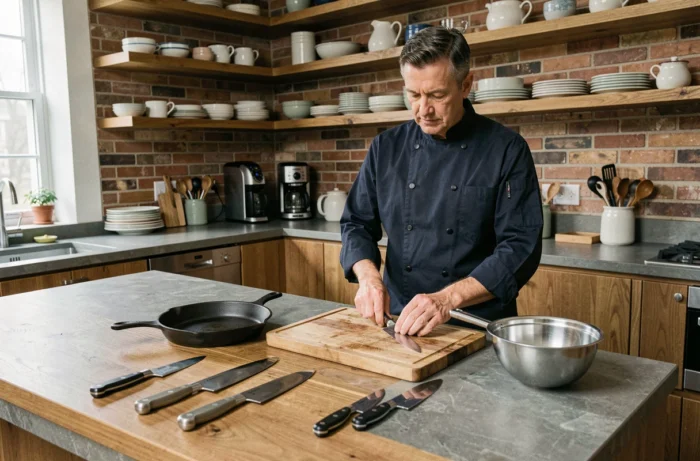
The choice of material for your cooking utensils affects the quality of meals as much as their longevity. Three main families dominate the domestic market: stainless steel, cast iron, and non-stick coatings (PTFE, ceramic).
18/10 stainless steel remains the most versatile material for searing, deglazing, and transitioning from stovetop to oven. It does not release compounds into food, withstands metal utensils, and can be repaired (polishing, straightening). Its downside: it requires a bit of technique to prevent food from sticking.
Cast iron, whether raw or enameled, excels in slow cooking and heat retention. A well-maintained cast iron pot can last for decades. Its weight is its only real drawback for daily use.
Non-stick pans are the subject of a distinct debate regarding PFAS (per- and polyfluoroalkyl substances), used in some coatings. The recent French ban on PFAS does not directly concern non-stick pans. This does not mean the issue is settled: the controversy over the presence of PFAS in cooking coatings remains intense, and several manufacturers have begun offering PTFE-free alternatives. Do not confuse regulatory compliance with the complete absence of PFAS in a product.
- Stainless steel: durable, repairable, suitable for all heat sources, but requires fat for high-temperature cooking.
- Raw cast iron: excellent thermal inertia, nearly indestructible, but heavy and requires regular seasoning.
- Non-stick coating: user-friendly for delicate cooking (eggs, fish), but limited lifespan and frequent replacement if the coating degrades.
Versatile or specialized kitchen equipment: balancing without cluttering
Multiplying specialized appliances is the primary cause of clutter and waste in a kitchen. A raclette machine, an electric pasta maker, a heated blender: each serves a specific function, but their actual usage rate is often low.
Three versatile utensils cover the majority of preparations: a good-sized stainless steel sauté pan, a cast iron pot, and a properly sharpened chef’s knife. With these three items, you can sear, simmer, slice, and prepare almost all daily meals.
Before adding an electric appliance (stand mixer, steamer, juicer), ask yourself a simple question: how many times a month will you actually use it? If the answer is less than two or three, the investment is not justified. It is better to allocate this budget to a higher-quality basic utensil that will be used every day.

The same reasoning applies to meal preparation. A clear work surface, a stable and thick cutting board, a stainless steel mixing bowl: the quality of preparation depends more on the workspace than on the number of accessories.
Maintenance and durability: extending the life of your kitchen equipment
Durable kitchen equipment is also well-maintained equipment. The lifespan of a raw cast iron pan can be measured in decades if seasoned regularly. Conversely, a non-stick coating scratched by metal utensils will lose its effectiveness in a few months.
Some maintenance rules can radically change the lifespan of the equipment:
- Avoid thermal shocks on stainless steel and cast iron (never run a hot pan under cold water).
- Sharpen your knives on a whetstone rather than with a roller sharpener, which removes too much material.
- Store non-stick pans with a textile separator between each piece to protect the coating.
- Descale water appliances (kettle, coffee maker, steamer) regularly to maintain their energy efficiency.
A repairable and well-maintained utensil remains the best long-term investment. The initial purchase price is only a fraction of the real cost: add maintenance, potential replacement, and energy consumption to evaluate the true budget of kitchen equipment. Choosing fewer appliances, but better ones, remains the most reliable strategy for successful daily meals.