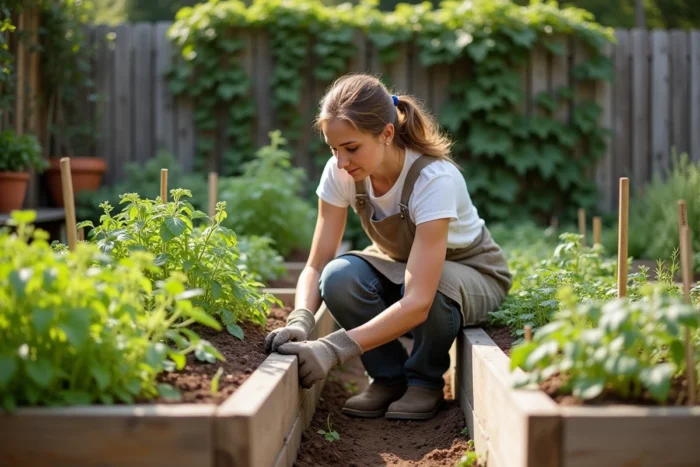
Between full soil, raised beds, and mounds, between clay soil and sandy soil, the yields of an organic vegetable garden can vary from one to three times depending on the initial choices. Before sowing anything, the question that determines the rest of the season concerns the growing medium and soil quality. This article compares the technical options and details the concrete levers that separate a productive organic garden from a disappointing one.
Full soil, mound, or raised bed: comparison table to choose your growing medium
Drainage, root aeration, adaptation to small spaces: these criteria vary significantly from one medium to another and condition success from the first season.
| Criterion | Full soil | Mound (permaculture) | Raised bed |
|---|---|---|---|
| Drainage | Depends on the texture of the existing soil | Good to excellent (layering of materials) | Excellent (controlled substrate) |
| Root aeration | Variable, slow improvement through compost | High from the first season | High, uniform |
| Difficult soil adaptation (clay, polluted) | Low without heavy amendments | Medium (the base rests on the existing soil) | Strong (isolation from the existing soil) |
| Small spaces or balconies | Impossible | Possible but cumbersome | Ideal |
| Setup cost | Almost zero | Possible reclaimed materials | Higher (wood, substrate) |
| Long-term maintenance | Regular mulching and composting | Reloading organic layers | Renewal of substrate every few years |
For sandy or stony soil, the mound compensates for the lack of water retention with its layers of organic matter. For compact clay soil, the raised bed avoids years of amendment work. Full soil remains the most economical choice when the soil is already loose and well-drained.
Specialized resources detail these approaches according to regional contexts, such as https://www.jardinage-bio.com/ which offers sheets tailored to each type of organic cultivation.
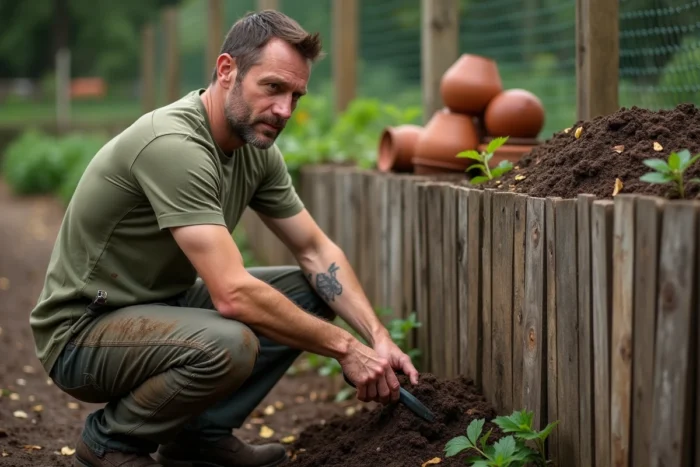
Soil test before planting: pH and texture as a starting point
Knowing the pH and texture of the soil before planting guides amendments from the start and avoids haphazard corrections for months.
Measuring the soil pH and texture allows for adapting amendments from the beginning instead of correcting blindly for months. An acidic soil (low pH) does not respond to the same inputs as a calcareous soil. Without this data, compost or wood ash can worsen an imbalance instead of correcting it.
How to proceed without a laboratory
- A pH kit sold in garden centers provides a reliable reading to guide initial choices. The test is done by mixing a soil sample with distilled water.
- Texture is assessed by hand: soil that forms a compact, sticky ball is clayey, soil that slips between the fingers is sandy, and a mixture that crumbles into fine grains is close to loam.
- Observing wild plants already present on the plot (dock for acidic soil, poppy for calcareous soil) confirms or complements the results of the kit.
Adapting compost, lime, or sulfur based on the measured pH shortens the time to productivity for the vegetable garden. A well-diagnosed soil from the first year avoids two to three seasons of trial and error.
Water management in an organic vegetable garden: permanent mulching and organic matter rather than intensive watering
Episodes of drought are increasing. Watering more does not compensate for soil that retains nothing. The strategy that works in organic gardening relies on a trio: soil rich in organic matter, permanent mulching, and varieties adapted to heat.
The role of mulching beyond water retention
A thick mulch (straw, dead leaves, chipped branches) limits evaporation, regulates soil temperature, and nourishes microbial life as it decomposes. In contrast, a mulch that is too fine or placed on dry soil creates an impermeable crust that prevents rainwater from penetrating.
Mulching on already moist soil remains the basic rule. A generous watering followed by a layer of mulch retains moisture much longer than light daily watering on bare soil.
Drought-resistant varieties
Some varieties of tomatoes, squash, and beans tolerate water stress better. Heirloom seeds, often selected locally over generations, exhibit superior hardiness compared to commercial hybrids in a low irrigation context.
Functional biodiversity in the vegetable garden: refuge zones and beneficials
Leaving a strip of tall grass at the edge of the vegetable garden, a pile of wood in a corner, or a few wildflowers between the planting beds is not neglect. These refuge zones attract beneficials (ladybugs, hoverflies, ground beetles) that regulate aphid, slug, and caterpillar populations without any treatment.
Even so-called “organic” treatments (Bordeaux mixture, pyrethrum) also eliminate useful insects when applied systematically. Treating as a last resort rather than as prevention protects the balance of the vegetable garden in the long term.
- An insect hotel placed near the vegetable garden provides nesting shelters for lacewings and osmias, effective pollinators.
- Plant associations (basil near tomatoes, nasturtiums at the edge) disrupt pests with their scents and attract pollinators.
- Leaving a few vegetables to go to seed (carrots, parsley) provides nectar for adult hoverflies whose larvae devour aphids.
This living network reduces pest pressure season after season, something that the occasional application of a product never achieves.
A pH test, a growing medium suited to the terrain, mulching applied at the right time on moist soil, and a few square meters left for beneficials lay foundations that years of watering and treatments will not replace.