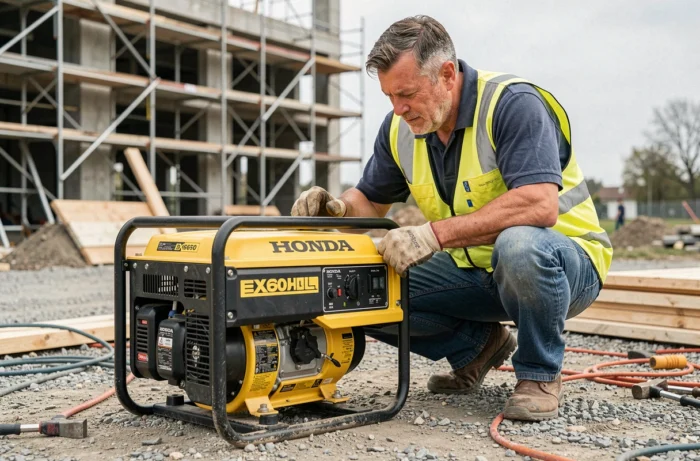
The Honda EX650 occupies a very specific niche in the portable generator market: that of the micro-generator for electronic use, where current stability takes precedence over raw power. Its AVR voltage regulation and four-stroke engine make it a unique technical tool, far beyond simple construction site backup.
AVR Regulation and Electronic Compatibility of the Honda EX650
The majority of entry-level portable generators deliver current whose waveform varies according to the load. The Honda EX650 features a AVR voltage regulation system that maintains a stable output, even during fluctuations in demand.
This characteristic makes it directly compatible with sensitive electronic equipment: laptops, measuring instruments, audio equipment, or field medical devices. Connecting this type of load to a conventional generator with side valves exposes it to micro-surge voltages that can damage power supplies.
We recommend discovering the Honda EX650 generator with a focus on this compatibility point, as it is precisely what sets it apart from competing models in this power range.
In practice, this regulation translates to usable current without an intermediate inverter. For a traveling technician or an outdoor photographer, it is one less constraint in the power supply chain.
Gas Consumption and Real Autonomy in Portable Use
The four-stroke engine of the EX650 consumes significantly less than a two-stroke engine of equivalent power. Honda designed the EX series with an energy efficiency logic that extends autonomy without increasing the tank capacity.
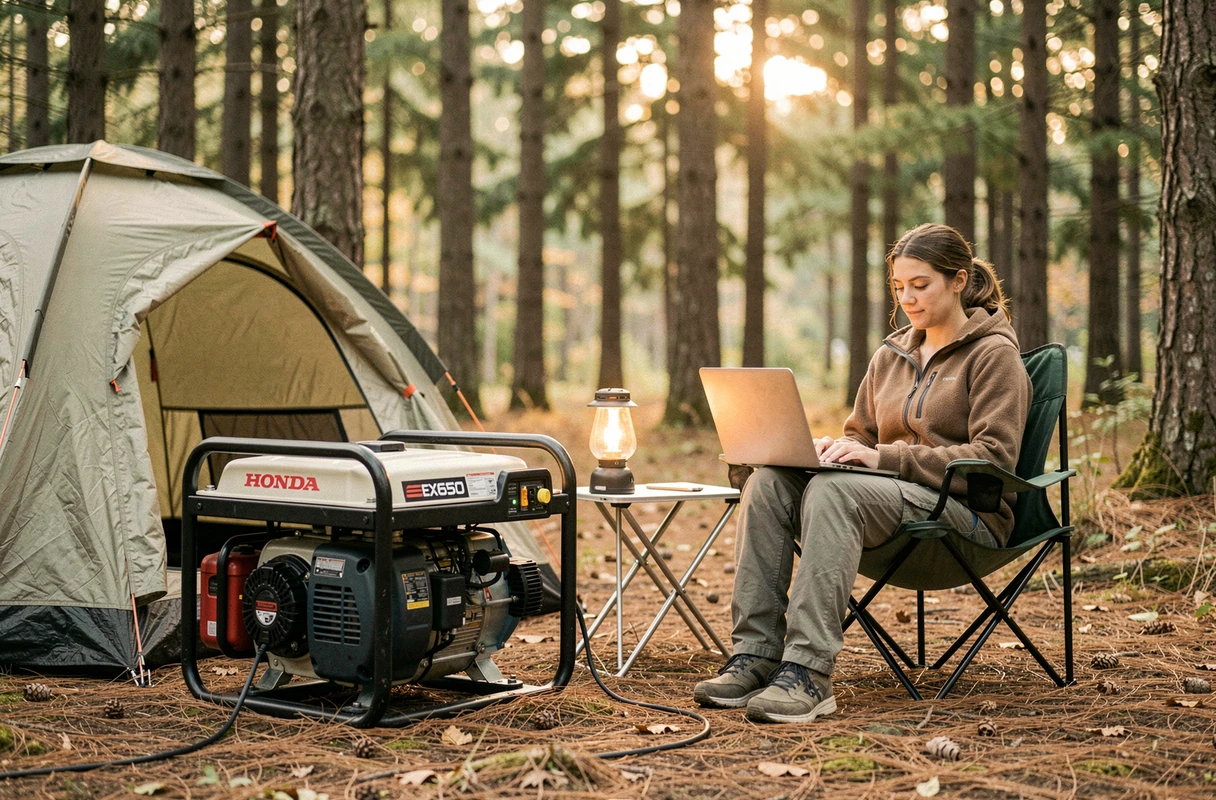
In practice, this means longer working sessions between refuels. For camping, outdoor filming, or powering lightweight DIY tools, the extended autonomy avoids frequent interruptions.
The choice of an overhead valve (OHV) engine, common to the Honda range, contributes to this efficiency. Compared to side valve architectures still present in some manufacturers, thermal efficiency is better and combustion is cleaner.
Power-to-Weight Ratio for Transport
A portable generator that is too heavy loses its appeal. The EX650, designed to be moved by hand, remains in a weight category that allows transport by a single person.
This power-to-weight ratio positions it between battery-powered energy stations (lighter but limited in duration) and construction generators (more powerful but difficult to transport). For intermittent outdoor use, it is the most relevant compromise.
Integrated Safety Features and Reliability in Harsh Conditions
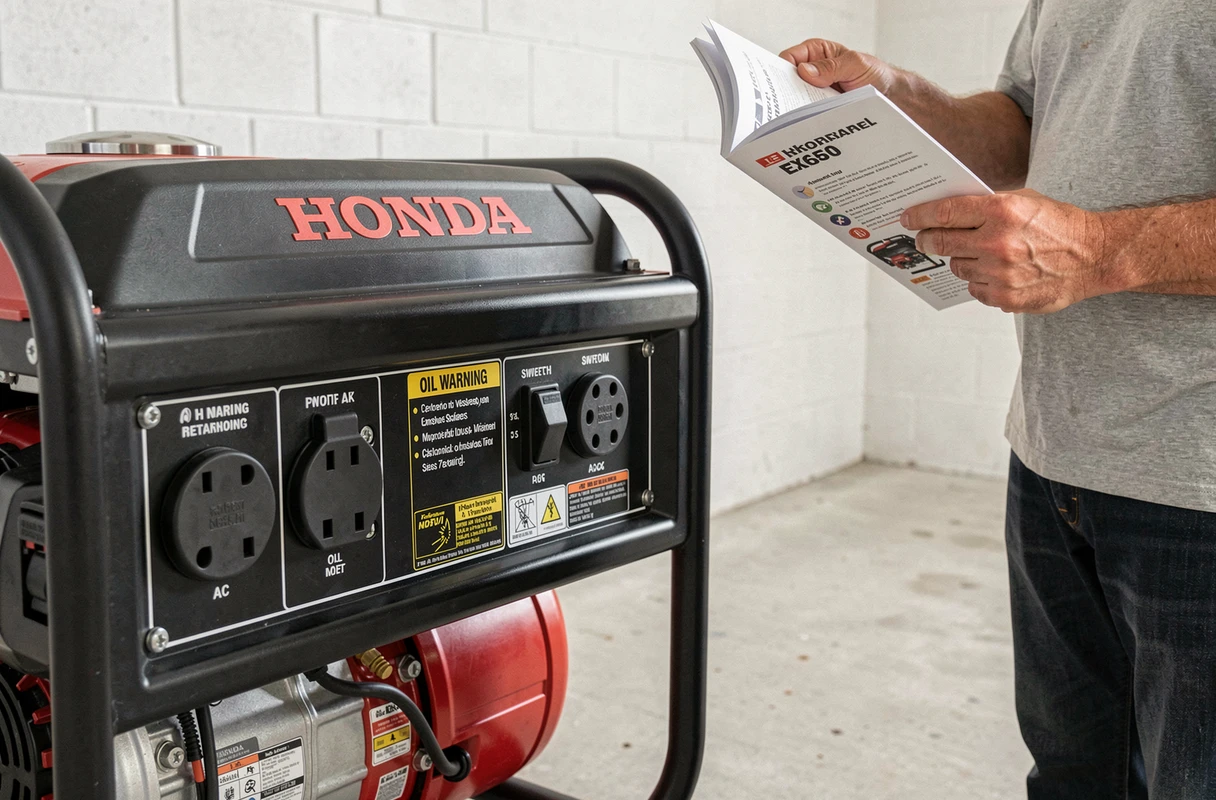
Honda has strengthened safety devices on its portable ranges. The EX650 includes a low oil automatic shut-off system, a protection that prevents engine damage during prolonged use without constant monitoring of the oil level.
This mechanism is not trivial. On a construction site or while camping, low oil remains the leading cause of premature destruction of a small generator. The protection shut-off eliminates this risk.
- Automatic shut-off via oil level sensor, which cuts the engine before lubrication becomes insufficient
- Protection against electrical overloads, limiting damage in case of excessive connections
- In some markets, technology dedicated to cold climates to prevent shutdown in freezing conditions
These safety features extend the lifespan of the generator and reduce long-term maintenance costs. A well-maintained EX650 retains its performance for many years, justifying the initial investment compared to cheaper models lacking these protections.
Portable Generator or Battery Station: Selection Criteria
The portable energy market is now clearly segmented between thermal generators compatible with electronics and rechargeable battery stations. The Honda EX650 is on the thermal side, with a decisive advantage: autonomy is only limited by the available fuel.
A battery station offers total silence and zero emissions, but its capacity is fixed. Once the battery is empty, an external source is needed to recharge it. The gasoline generator, on the other hand, restarts in seconds with a full tank.
Scenarios Where the EX650 Excels
- Outdoor DIY work requiring continuous power for several hours
- Extended camping where solar charging is insufficient or unpredictable
- Backup power for sensitive electronic equipment, without additional inverter
- Mobile use where the weight of a conventional construction generator is prohibitive
For a purchase focused on versatility, the EX650 covers a range of uses that neither a portable station nor a construction generator can address alone. Its AVR regulation places it in a unique category among low-power generators.
Distribution Network and Access to Honda Parts
A generator is only as good as its after-sales support. Honda has a network of distributors specialized in industrial and recreational equipment, which facilitates access to spare parts and routine maintenance.
We observe that models from less established brands often face supply issues for consumables. An air filter, a spark plug, or a gasket that cannot be found turns a functional generator into dead weight. With Honda, the availability of parts is ensured in the long term.
This distribution network is a selection criterion often underestimated during the purchase. The acquisition price represents only a fraction of the total cost of ownership, and ease of maintenance weighs heavily in the equation over five or ten years of use.