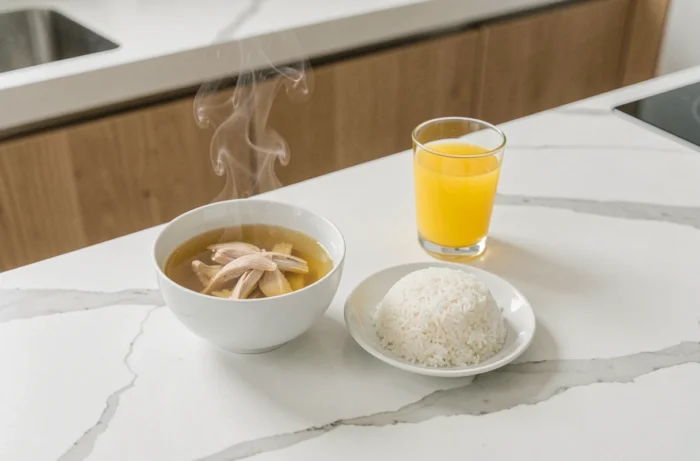
The prospect of eating only clear broth for three days before a colonoscopy discourages many patients. The good news is that practices are evolving: a well-structured low-fiber diet allows for real meals, with proteins and refined starches, while effectively preparing the colon.
Low-fiber diet before colonoscopy: why long restrictions are decreasing
Many documents still in circulation recommend three full days of a strict residue-free diet. The guidelines from ESGE (European Society of Gastrointestinal Endoscopy) instead suggest 24 to 48 hours of a low-fiber diet, rather than several days of severe restriction.
In practical terms, this means that the day before yesterday you could still eat a nearly normal meal. Only the last 24 to 48 hours require the removal of high-fiber foods: raw vegetables, fruits with skins, whole grains, seeds, and legumes.
Several endoscopy centers report that just one day of a very low-fiber diet, combined with sufficient caloric intake, provides a colonic preparation quality comparable to the strict liquid protocol. Patients report significantly less hunger, less fatigue, and fewer headaches.
To find dietary recommendations on Pharmidea, which detail the allowed foods day by day, the logic remains the same: maintain a real caloric intake through lean proteins and white starches.
Lean proteins and white starches: the duo that fills without leaving residue
Have you noticed that hunger returns quickly after a bowl of broth? It’s logical: it lacks the proteins and complex carbohydrates that slow gastric emptying. The residue-free diet does not prohibit either, as long as you choose wisely.
Allowed proteins in a residue-free diet
- Chicken, turkey, veal, or white fish cooked without added fat (steamed, baked, in foil). These are low-fiber protein sources that provide lasting satiety.
- Hard-boiled, soft-boiled, or plain omelet eggs, easy to prepare at any time of the day.
- Cooked pressed cheese (such as Emmental, Comté) in small quantities. Avoid moldy cheeses and fresh cheeses high in lactose if you digest them poorly.
Lean proteins are the best appetite suppressants in a residue-free diet. Planning a portion at each meal significantly reduces the feeling of deprivation.
Refined starches: white rice, pasta, white bread
Well-cooked white rice, non-whole pasta, and white bread (or crispbread) form the energy base of the menus. They provide carbohydrates without leaving residue in the colon.
A common pitfall: choosing “multigrain” bread or “semi-whole” pasta out of habit. Check the packaging. During this short period, only products made from refined white flour are suitable.
Filling menus for two days before the colonoscopy
Here are meal ideas that respect the low-fiber diet while providing enough calories to stay satisfied. Adjust the portions to your usual appetite.
Two days before the exam (D-2)
| Meal | Proposed Menu |
|---|---|
| Breakfast | Tea or coffee, crispbread with butter, one hard-boiled egg |
| Lunch | Grilled chicken fillet, white rice, filtered vegetable broth, Emmental cheese |
| Snack | Plain biscuits like butter cookies, filtered apple juice |
| Dinner | White pasta with steamed sole fillet, a small knob of butter, smooth apple sauce |
Day before the exam (D-1)
| Meal | Proposed Menu |
|---|---|
| Breakfast | Coffee or tea, toasted white bread with fruit jelly, smooth plain yogurt |
| Lunch | Blended and filtered carrot soup, two-egg omelet, white rice |
| Snack | Crispbread, filtered grape juice |
| Dinner (light, according to doctor’s instructions) | Filtered chicken broth, one slice of white bread, a piece of cooked cheese |
The dinner the night before is often the last solid meal allowed. After this meal, most protocols switch to clear liquids and the purging solution. Check the deadline indicated by your gastroenterologist.
Prohibited foods and common mistakes to avoid
The list of high-fiber foods to avoid is short, but omissions are frequent. Some products seem harmless while leaving residues in the intestine.
- Fresh fruits with skins or seeds, dried fruits, chunky applesauce. Only filtered juices (apple, grape) and smooth applesauce are acceptable.
- Raw or unblended cooked vegetables. Even a light green salad is to be avoided.
- Whole grains, seed bread, muesli, wheat bran. Anything that contains insoluble fibers.
- Legumes (lentils, chickpeas, red beans): they ferment and leave a lot of residue.
- Fatty meats, cold cuts, fried foods: they slow digestion without benefiting preparation.
A common mistake is to compensate for the restriction by snacking on processed sugary foods (candies, sweets). These products do not satisfy and may contain dyes that interfere with colon imaging during the exam.
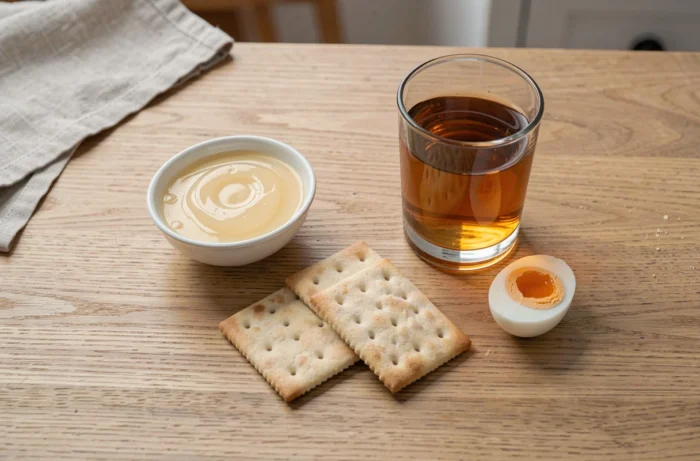
Hydration and hunger management on purge day
On the day you take the colonic preparation solution, drinking plenty between doses of the purge limits fatigue and headaches. Still water, degreased broth, light tea, flavored water without pulp: vary the liquids to avoid boredom.
Why is hunger stronger that day? Because transit speeds up and the stomach empties quickly. Drinking in small, regular sips every fifteen to twenty minutes maintains a feeling of gastric fullness.
Salty broths (chicken, filtered vegetables) are more filling than plain water and compensate for sodium loss related to the purge. Keep a thermos handy.
The residue-free diet before a colonoscopy does not require suffering from hunger. By focusing on lean proteins, white starches, and good hydration, preparation remains bearable. The shift towards shorter protocols, with real solid food allowed until the day before, confirms that a clean colon and a satisfied patient are not incompatible.