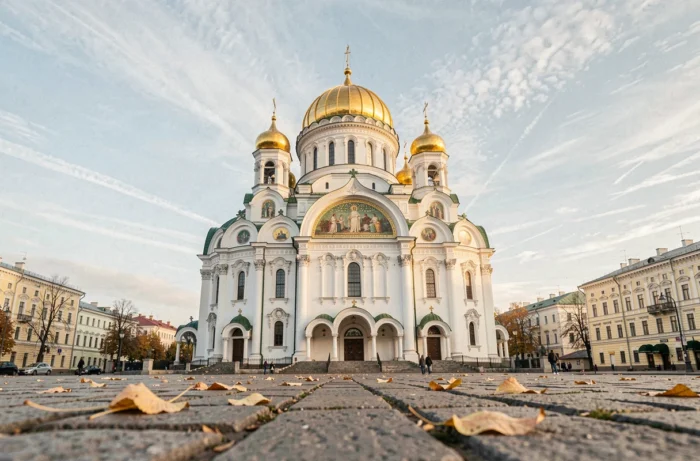
Tourism in Ukraine has been restructured around a west-Carpathian axis since 2023. General public articles continue to list destinations across the territory as if nothing has changed, while the geography accessible to travelers has significantly reduced. Understanding this reconfiguration is a prerequisite for any serious itinerary to the most beautiful destinations in Ukraine.
Safety map and accessible areas for travel in Ukraine
Any planning of a trip to Ukraine now involves consulting the updated safety maps provided by Ukrainian authorities. The territory is divided into zones classified by alert levels (yellow, red), and these classifications condition access to accommodations, transportation, and even tourist sites.
Kyiv has been applying new rules related to yellow and red alerts since 2026, with real-time movement restrictions. A traveler planning to visit the capital must incorporate this constraint into their daily program.
The western oblasts (Lviv, Zakarpattia, Ivano-Frankivsk) remain the most accessible. The UK, through the Foreign Office, maintains a recommendation against traveling to Ukraine but clearly distinguishes risk levels by region. The resources available on ukrtravel.net allow for cross-referencing this data before finalizing an itinerary.
Crimea and the entire Donbass region are inaccessible for civilian tourists. Odessa, while operational, suffers from periodic strikes that make any beach stay uncertain. We recommend focusing a first trip on the Lviv-Carpathians-Kamyanets-Podilskyi arc.
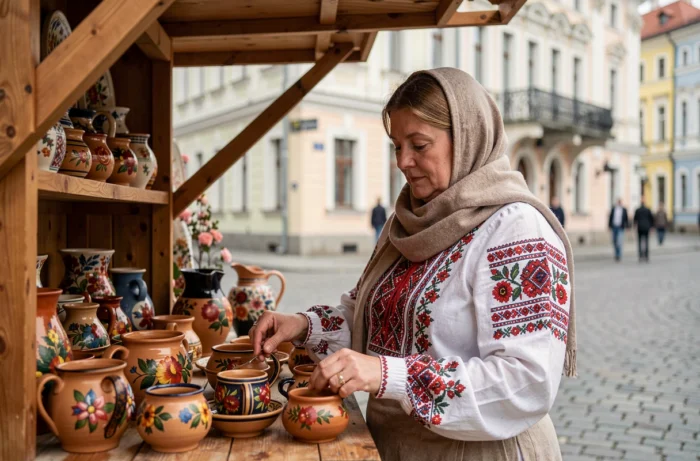
Lviv, the pivot of current Ukrainian tourism
Lviv is no longer just a beautiful baroque city to add to a list. It has become the nerve center of tourism in Ukraine, absorbing a massive share of domestic visitors and the few foreigners present in the country.
Surveys conducted between 2023 and 2025 show that nearly nine out of ten visitors in Lviv are Ukrainians. Among foreigners, less than a third cite leisure as their main reason for coming. The rest are divided among humanitarian workers, volunteers, and professionals on assignment.
This reality transforms the local offer. The city has developed a dense network of cafes, coworking spaces, and restaurants aimed at clientele who stay for several weeks. The historic center, listed as a UNESCO World Heritage site, retains all its architectural power: Armenian cathedral, Rynok Square ensemble, Solomiya Krushelnytska Opera.
What Lviv offers the informed traveler
- An intact architectural heritage, with Renaissance, baroque, and Art Nouveau buildings concentrated in a restricted pedestrian area
- A culinary scene that has been enriched by the arrival of chefs displaced from other regions, creating unprecedented culinary fusions
- Direct rail access from Poland (Przemyśl border crossing), making it the most logical entry point for a European traveler
Ukrainian Carpathians: hiking and nature without mass tourism
The Ukrainian Carpathians are the only fully operational nature destination in the country. Attendance has significantly increased since 2024, driven by domestic tourism and a few informed foreign hikers.
The massif offers modest altitudes (Hoverla peaks just above 2,000 meters) but deep valleys, UNESCO-listed beech forests, and Hutsul villages where wooden architecture is still functional, not museum-like.
The Zakarpattia region, on the southwest side of the massif, has a distinct character: Hungarian and Slovak influences are noticeable in the toponymy, cuisine, and religious architecture. Uzhhorod, the regional capital, serves as a base camp with a decent accommodation offer.
Accessible routes in the Carpathians
The trail leading to the summit of Hoverla from the village of Zarosliak remains the classic route. To avoid the Ukrainian summer overcrowding, prefer the ridges of the Svydovets massif or the valley of the Tchorna Tysa, which are significantly less traveled.
Hiking infrastructure remains rudimentary compared to the Alps or the Tatras. There are no guarded huts at altitude, and little standardized marking. A GPS and water autonomy are necessary as soon as you leave the main trails.
Kamyanets-Podilskyi and Chernivtsi: the heritage of Podolia
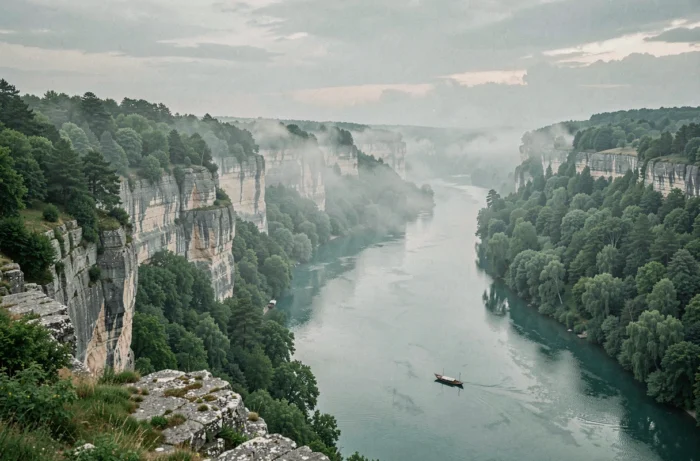
These two cities, located in the southwest of the country, form a coherent pair for a two to three-day detour from Lviv. Kamyanets-Podilskyi features a spectacular medieval fortress perched on a rocky spur surrounded by the Smotrych canyon. The site is one of the most photographed in Ukraine.
Chernivtsi, formerly Czernowitz of the Austro-Hungarian Empire, is home to a national university whose campus is listed as a UNESCO World Heritage site. The architecture reflects a rare blend of Byzantine, Roman, and Moorish styles, concentrated in a single set of buildings.
Podolia remains relatively spared from the conflict. Bus connections from Lviv are operational, although the journeys are long. Local accommodation is limited to small hotels and rental apartments.
Ground reality and traveler profile in Ukraine
Tourism in Ukraine is not classic leisure tourism. The majority of foreign visitors come for professional or humanitarian reasons, and tourist infrastructures are adapting to this audience. English-speaking local guides have multiplied in Lviv and Kyiv, often from the returning diaspora or converted professionals.
The land entry points from Poland, Slovakia, Hungary, and Romania are the preferred access routes. The Polish-Ukrainian border crossing remains the busiest, with variable waiting times depending on the day.
- Check alert levels daily, including for Kyiv
- Favor the oblasts of Lviv, Zakarpattia, and Ivano-Frankivsk for a first stay
- Anticipate delays at land borders and allow extra time in the itinerary
- Have a functional air alert app on your phone
Ukraine remains a country with remarkable architectural and natural heritage. St. Sophia Cathedral in Kyiv, the primeval forests of the Carpathians, the fortresses of Podolia: these sites are worth the trip. The security situation simply requires more rigorous preparation than before 2022, and a realistic renunciation of the eastern and southern regions.