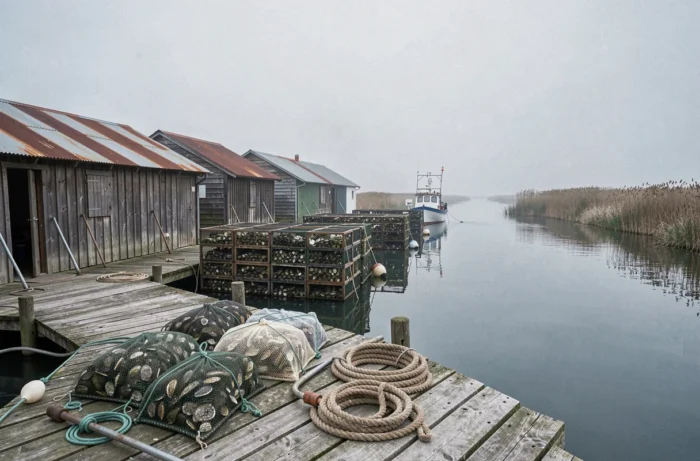
The oyster farm in “Demain nous appartient” is not a studio set. The filming location used by the TF1 production is situated on the shores of the Thau lagoon, in the shellfish farming area that stretches between Sète and Loupian. This choice anchors the series in a real professional landscape, with active oyster tables visible in the background.
Technical constraints of filming in the shellfish farming area in Sète
Filming on an active oyster farm imposes constraints that mainstream articles do not address. The production must work around the tidal cycles of the Thau lagoon, the working hours of neighboring oyster farmers, and the noise disturbances related to the machinery used for handling oyster bags.
The farm used to represent “Les Huîtres de Jeanne,” Alex Bertrand’s operation in the series, underwent a scenographic adaptation on an existing structure. The production did not build a new building: it dressed a real farm, adding removable decorative elements (signage, tasting furniture, lighting) that are taken down between filming sessions.
This approach helps reduce set costs while maintaining visual authenticity. Wide shots show the oyster parks and the reflection of the water on the lagoon, which are impossible to reproduce in a studio. We observe that this “in situ” filming method on active shellfish farms remains rare in French daily dramas.
For those looking for the address of the oyster farm in Demain nous appartient, the site is located on the coastal strip between Sète and Bouzigues, facing the production tables that have made this designation famous.
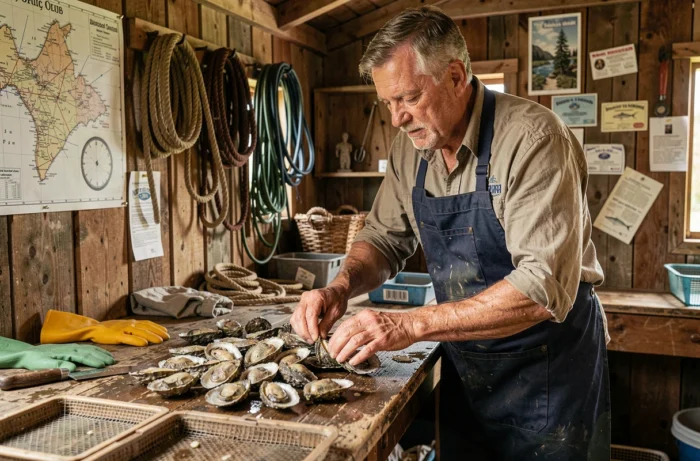
DNA oyster farm: a restored set turned tourist hotspot
The farm has been completely restored for the needs of the series. Télé-Loisirs documented this new set during its launch, highlighting that it is a restored farm serving both as a filming location and a showcase for the local oyster farming sector.
Tourist traffic around the filming locations of DNA has seen a notable increase over several seasons. Midi Libre reports that thousands of visitors come to Sète, by boat or on foot, on pilgrimage to the filming sites. The oyster farm is one of the most photographed stops, alongside the bar Le Spoon and the police station.
What visitors find on site
The farm does not operate as an official visitor site. No ticket office, no marked path. Fans go to the shellfish farming area and identify the building thanks to photos shared on social media, particularly in the Facebook group “Demain Nous Appartient Actualités et Spoilers.”
This spontaneous influx creates tension with the oyster farming professionals working nearby. Visitors move between the oyster tables, sometimes without knowing the access rules to production areas. The neighboring farms are not sets but active operations, with strict health regulations regarding shellfish handling.
- Access to the filming farm is not guaranteed outside of production breaks, and no sign indicates the location from the main road.
- Neighboring oyster farmers sometimes offer tastings, allowing visitors to combine their “fan” visit with a discovery of the profession.
- The town hall of Sète and local tourist offices are gradually incorporating DNA filming locations into their tours, without specifically marking the farm individually.
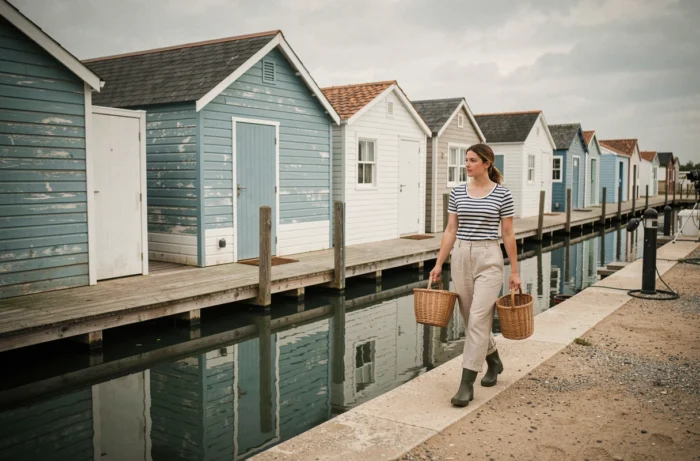
Economic impact of filming Demain nous appartient on Thau oyster farmers
The filming generates direct and indirect benefits for the shellfish farming sector. The direct benefits concern the owner of the farm, who receives a compensation fee for its use. The indirect benefits affect the entire area: the television visibility of the Thau lagoon and its oysters stimulates viewers’ curiosity.
We recommend distinguishing between two situations. The farms directly linked to the filming benefit from media exposure that can transform their business. In contrast, for some owners, cohabiting with a production team for several months a year represents a heavy logistical constraint, with periods when the operation is partially inaccessible.
Filming tourism and oyster farming: a recent coexistence
This dynamic of “filming tourism” applied to shellfish farming areas remains a recent phenomenon. The farms of the Thau lagoon were not designed to welcome the public. Their functional architecture (storage sheds, sorting tables, purification basins) does not naturally lend itself to visits.
The series has contributed to changing the perception of these places. The oyster farm transitions from a production tool to a recognizable set for millions of viewers. This shift creates commercial opportunities, but also raises questions about the sustainability of the model: what happens when the series stops or changes its set?
Iconic filming locations of DNA in Sète: beyond the farm
The oyster farm is part of a network of real sets used by the production in Sète and its surroundings. The city has hosted filming since the first season, and the locations have multiplied over the course of the storylines.
- The bar Le Spoon, a gathering point for the characters, is one of the most recognizable sets of the series.
- The Saint-Clair hospital serves as the backdrop for medical storylines, with scenes filmed in an existing building.
- Chloé Delcourt’s house, a central character played by Ingrid Chauvin, is located in downtown Sète.
- The Sète market regularly appears as a place of daily life for the characters.
This network of real locations gives DNA a strong geographical identity. Sète is not just a backdrop but a character in its own right in the series. The oyster farm participates in this logic by anchoring the storylines in the local economic fabric, where other dramas settle for generic urban sets.
The next time the cameras turn towards the oyster tables of the Thau lagoon, the farm will continue to play its dual role: a fictional set and a witness to a profession that the series makes visible far beyond the Mediterranean basin.