The choice between the right hand and the left hand for applying henna is not merely an aesthetic whim. Two logics oppose each other: the ease of technical execution (working on the non-dominant hand) and the visibility of the design in daily life. We notice that most online guides focus on the first without ever addressing the second, even though it largely determines the final satisfaction.
Laterality and henna design: why the dominant hand changes everything
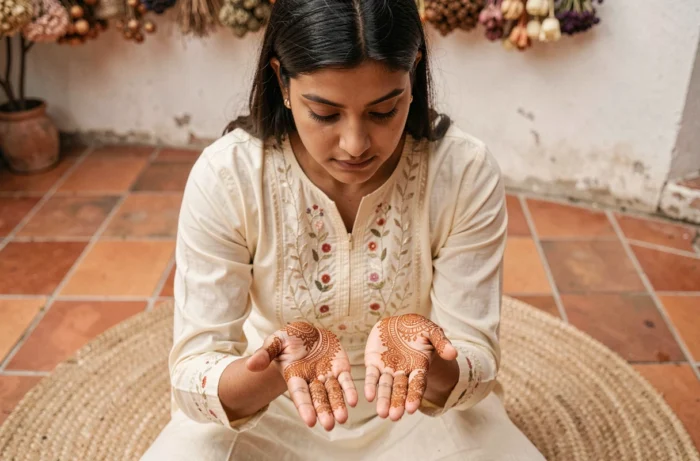
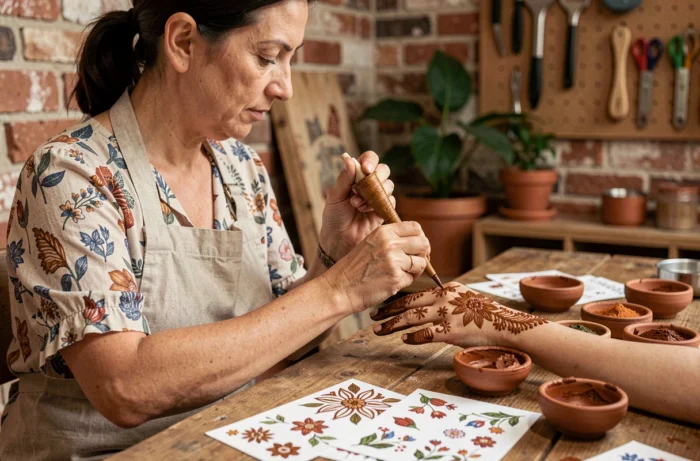
The hand holding the cone or syringe must be the dominant hand. For a right-handed person, the left hand therefore receives the design by default, and vice versa for a left-handed person. This mechanical rule conditions wrist stability, the consistency of pressure on the cone, and the fluidity of curves.
An irregular design cannot be corrected. Unlike makeup, henna paste deposits its pigment (lawsone) as soon as it contacts the stratum corneum. Any smudge leaves a residual orange mark even after immediate cleaning. The sharpness of the line directly depends on the control of the applying hand, not on the quality of the cone.
We recommend beginners to apply a first design on the non-dominant hand for this reason. If you want to know everything about henna on hands before you start, the choice of the applying hand remains the first parameter to secure.
For an ambidextrous person or someone who entrusts the application to a professional, this constraint disappears. The question then shifts to another area: that of visibility.
Right hand or left hand for henna: the criterion of photographic visibility
None of the competing content addresses this point, which is the real deciding factor when the application is done by a third party.
Most exposed hand in daily gestures
Observe your own gestures throughout a day. The hand that holds the phone, gestures while speaking, or rests on a table during a meal is often the dominant hand. For a right-handed person, the right hand is therefore the most visible hand in social interactions and in photos.
If the goal of henna is primarily decorative (wedding, photo shoot, event), applying the design on the dominant hand maximizes its exposure. The technical compromise can be resolved by calling on a henna artist or by working with both hands with a friend.
Hand photographed on social media
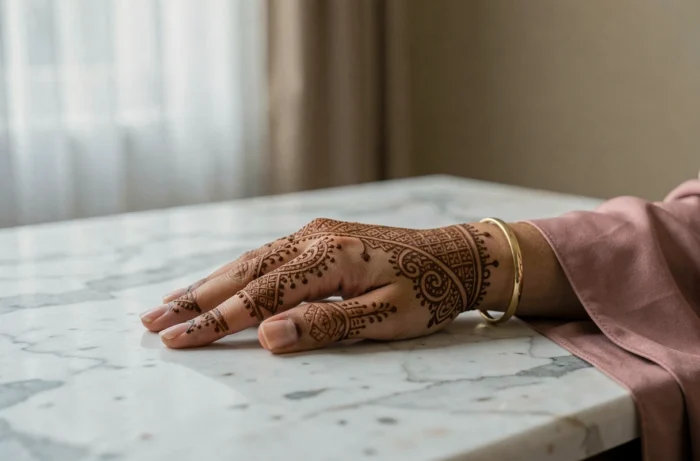
The most shared henna photos almost systematically show the palm open facing the camera or the back of the hand laid flat. The chosen hand does not matter for these static poses. However, for moving stories or videos, the dominant hand appears more in the frame, as it moves more naturally.
Choosing the hand based on the final use of the design (portfolio, social media, ceremony) avoids regrets. Henna on the left hand of a right-handed person often remains out of frame in spontaneous photos.
Henna wear based on the hand: friction, washing, and design longevity
The longevity of henna on the hands varies significantly depending on the mechanical stress on the tattooed area. Hands rub a lot, and the dominant hand experiences more friction daily: opening doors, writing, cooking, cleaning.
- Dominant hand: frequent contact with water, cleaning products, and surfaces. The design fades faster, especially on the fingers and palm.
- Non-dominant hand: less stress, the lawsone pigment remains embedded longer in the stratum corneum. The difference in longevity can reach several days.
- Back of the hand versus palm: the palm, regardless of the hand, undergoes faster cellular renewal. A design on the back of the hand lasts better than a palm design.
For a bride who wants her henna to remain vibrant throughout the festivities, applying the main design on the non-dominant hand offers a concrete advantage in longevity. The least used hand retains henna darker for longer.
Left-right symbolism: what traditions really say about henna
Online content often mentions an opposition between the left hand (reception, protection) and the right hand (action, projection). These associations stem from various traditions (palmistry, religious symbolism, hamsa), but no specific consensus regarding henna exists in documented sources.
In Maghreb traditions of bridal henna, both hands are generally tattooed. The question of choosing only one hand is a contemporary reflex, linked to the trend of temporary henna rather than complete ceremonial practices.
We observe that the symbolic meaning attributed to each hand varies by culture and region. Relying on a unique symbolism to choose your henna hand amounts to imposing a partial reading grid on a practice that historically covers both hands, feet, and sometimes forearms.
Decision tree: which hand to choose based on your situation
Rather than a universal answer, the choice depends on three concrete criteria to prioritize.
- You are applying henna yourself: start with the non-dominant hand. The quality of the design takes precedence over everything else.
- A professional is applying it and you want maximum visibility: choose the dominant hand, the most exposed in daily life and in photos.
- You want maximum longevity (wedding, multi-day festival): prioritize the non-dominant hand and the back of the hand to slow down pigment wear.
The best choice combines technical constraint and final objective. A right-handed person applying her own henna and wanting it to last will choose the left hand without hesitation. The same right-handed person, tattooed by an artist for a shoot, will benefit from having her right hand adorned.
One last point not to be overlooked: if you are still unsure, test a small discreet design on each hand during two spaced sessions. The direct comparison of the longevity and visual result on your own skin is worth all theoretical recommendations.