
Accessing museums, software, cultural outings, or online services without spending a dime remains a reality in France, but the access conditions evolve each year. Between partial free access, residency restrictions, and mandatory reservations, the landscape of free offerings deserves careful examination to distinguish genuine good deals from marketing promises.
Free access to museums in France: what the access conditions really change
The free access to permanent collections in Parisian municipal museums is often highlighted as a major asset of the capital. In practice, free access does not mean access without constraints. Several major institutions now require online reservations, even for visitors who do not pay an entrance fee, in order to manage visitor flow.
This evolution alters the perception of “free.” A visitor who arrives without a reserved time slot may be denied entry, even if the permanent collection is officially open to the public. Consulting articles on Mister Free Free allows one to keep track of these changes over the months, as the rules vary from one museum to another.
Another point rarely specified on public websites is that free access for those under 26 in national museums is conditioned on residency in the European Union. A French or European student benefits from this, but a non-European visitor of the same age will pay full price. This detail, although crucial, is often absent from the majority of “good deal” guides that merely mention the age range.

Free permanent collections and paid temporary exhibitions: the recurring trap
Not all free Parisian municipal museums offer the same scope of free access. The distinction between permanent collections and temporary exhibitions is an angle that many online contents overlook or ignore.
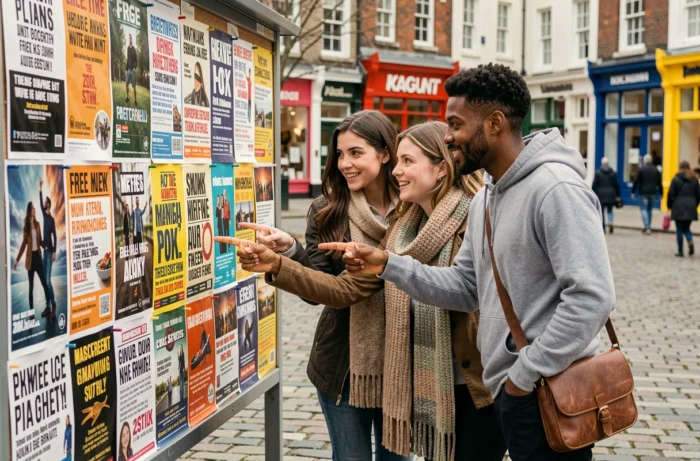
In practice, a visitor attracted by an exhibition poster in a museum reputed to be free sometimes discovers at the ticket counter that only the permanent collection is accessible without a ticket. Temporary exhibitions remain paid in most municipal establishments, with prices varying according to the event.
This distinction creates a gap between the promise of total free access conveyed by some websites and the reality on site. To avoid disappointment, checking on a case-by-case basis remains the only reliable method. Official museum pages generally indicate the exact scope of free access, but this information is often buried in the general conditions.
Free good deals beyond Paris: heritage, parks, and regional visits
The “free” reflex often focuses on Paris, but opportunities in the regions deserve closer attention. Several French cities offer free visit programs related to local heritage, public gardens, or seasonal cultural events.
- Public parks and gardens remain one of the few truly free and reservation-free leisure spaces, both in Paris (Luxembourg Garden, Buttes-Chaumont Park) and in the provinces
- Cities like Tours, Le Havre, or Limoges organize free family activities, especially during school holidays, often referenced on community or municipal platforms
- The European Heritage Days, held every third weekend of September, open sites that are usually closed or paid for free across France
The free offerings in the regions are less centralized than in Paris, making them harder to spot. There is no unique national aggregator listing all free outings city by city. Information is scattered across municipal websites, local tourist offices, and social media groups.
The role of online communities in spotting good deals
Facebook groups dedicated to free outings have tens of thousands of members who share good deals in real time. This community-based approach partially compensates for the lack of a centralized platform, but the reliability of shared information varies. An outing advertised as free may have changed conditions between the time of publication and the actual date.
Free software and digital services: what the freemium model hides
The world of free offerings is not limited to physical outings. Free software, applications, and online services represent a significant part of what internet users seek. The freemium model, dominant in the sector, is based on a simple principle: basic access is free, advanced features are paid.
This model works well for occasional users, but the limitations of free offerings become apparent as regular or professional use sets in. Limited storage, integrated ads, restricted export functions: the transition to paid is designed to seem natural after a few weeks of use.
The available data does not allow for precise quantification of how many users switch to paid versions, but feedback varies on this point. Some users remain on free versions long-term by accepting the constraints, while others feel that the time saved justifies the subscription. The decision depends more on usage profile than on the intrinsic quality of the service.
Beware of false free offerings in mobile applications
A recurring trend concerns mobile applications advertised as free on stores, but whose real content is locked behind in-app purchases. The mention of “in-app purchases” is present on the listing but is rarely read before downloading. For online games in particular, the line between free and paid quickly blurs after the first few hours of use.
Cultural free access in Île-de-France: the first Sunday of the month in question
The first Sunday of the month remains associated with free access in many national museums. However, not all establishments participate in this scheme, and some have suspended or modified it for visitor management reasons.
The most popular museums experience considerable crowds on these days, raising the question of the relationship between free access and quality of visit. Waiting in line for a significant duration to access crowded rooms is not necessarily a “good deal” as most visitors understand it.
Weekday visit slots, at reduced rates for certain audiences, sometimes offer a better experience than the free access on the first Sunday. Evaluating a good deal is not limited to the ticket price: waiting time, comfort of visit, and actual access to the works are part of the equation.
The landscape of free offerings in France continues to transform, with the digitization of access, residency conditions, and hybrid economic models. Identifying a true good deal now requires reading the detailed conditions, not just the word “free” in the title.